Home  

House of Promise

In Recent years , thousands of women and girls have been trafficked across borders and within country. over the last 10 years, the growing trafficking problem in south Asia has been recognized. Nepal and Bangladesh have been designated as “sending” countries or countries of origin in the regional web of trafficking. India and Pakistan are usually referred to as countries of “transit or destination”. Girls and women are trafficked within country boundaries to other countries within the region, and across regions and continents beyond south Asia. There is mounting concern about the problem of trafficking in Nepal. Nepal is considered to be one of the least developed countries of the world, lacking in sufficient economic capital, infrastructure and developed human resources to forge and independent path of development. Trafficking is an integral derivative of the need for outmigration in Nepal. Organisations working on trafficking issues estimate that thousands of women and girls are trafficked each year out of Nepal into neighbouring countries, primarily to India. According to the UNICEF reports 7,000 Nepali women and girls trafficked to India every year.Trafficking in girls and young women is increasing enormously in rural and urban areas of Nepal. 

It is a fact that more than 200,000 girls and young women can be found in the different parts of Nepal and boarding country who are working under mostly oppressive conditions in the various red light areas of Indian cities. These statistics are however based on assumptions that cannot be readily verified due to the underground nature of both the trade of trafficking as well as sex work. Approximately 50,000 women and girls work in restaurants, dance bars and massage parlors in Kathmandu and about one third of them are exploited sexually. The bars and restaurants are almost exclusively used by men, and till now, the female workers have been pressured by the owners to be available for whatever the customer wants. But the women and girls still hope to turn these into regular jobs where they are safe, properly paid and treated with respect. Most girls who are trafficked are from very poor families from villages where they or their families are lured by false marriages, or the promises of employment or education.Gang-rapes and beatings are common practice and more abuse is carried out when they are imprisoned in cages. Torture is used as a strategy to ensure their future compliance. Most of these innocent girls are forced to have sex with as many as 40 clients a day. 
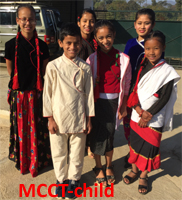
There are 75 districts in Nepal with widely differing geographical , climatic conditions and cultures. The traffickers’ network is active throughout the state with the rural Dalit(low caste) population being the most affected. In addition, domestic slavery is quite uncontrolled and in many cases the owner’s family sexually exploits the domestic workers. Tens of thousands of Nepalese girls and women are trafficked each year. They end up in brothels as sex workers or in homes and factories as slaves. They are trafficked within Nepal and to countries such as India, Saudi Arabia, Malaysia, Hong Kong and the UAE.


(Misheal Pariyar) My Life-Cycle ! My...Testimony!! MY Vision !!!

Mamta Childcare Trust

VOLUNTEERING
PROGRAM

Mamta Childcare Trust

MAMTA
CHILDCARE
TRUST

Mamta Childcare Trust

SOCIAL
INVOLVEMENT


  • Stay Connected

Join Our Email List

Contact Us

You can contact us by filling out the quick form to the left, by phone or by email.We look forward to assist you.